
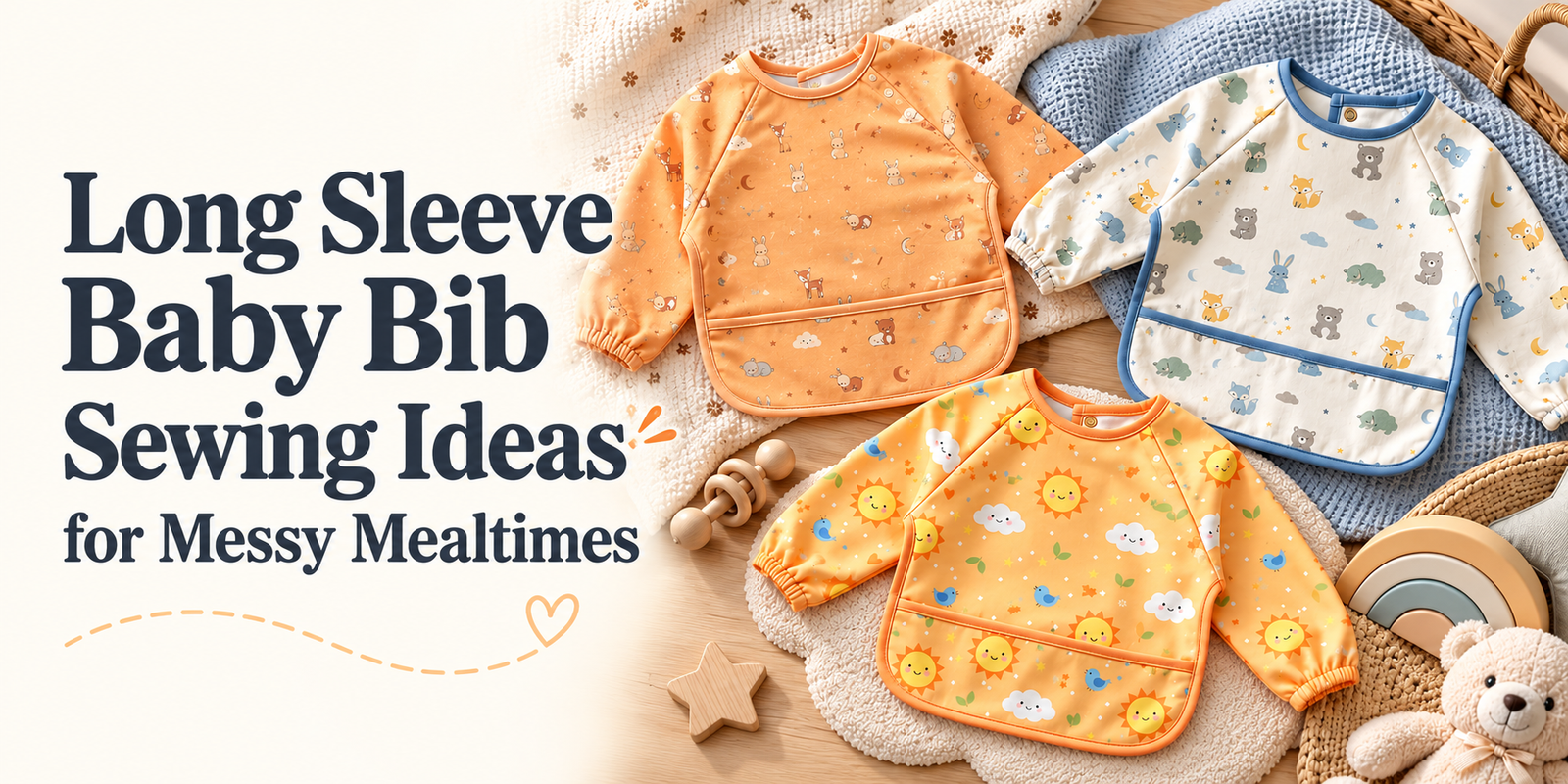
A long sleeve baby bib sewing pattern is a practical starting point for making a reusable bib that protects more than the front of a baby’s outfit. With covered sleeves, a comfortable neckline and a roomy front, this simple sewing project can help manage the spills and splashes that come with everyday feeding.
Whether your little one is exploring purées or learning to use a spoon, a full coverage bib gives them room to practice while helping keep clothing cleaner. Choosing a full coverage toddler bib sewing pattern also lets you adapt the size and fabric to suit a growing child.
Here is what to look for in a pattern, which fabrics to consider and how to add useful details without making the project too complicated.
Why Choose a Long Sleeve Baby Bib?
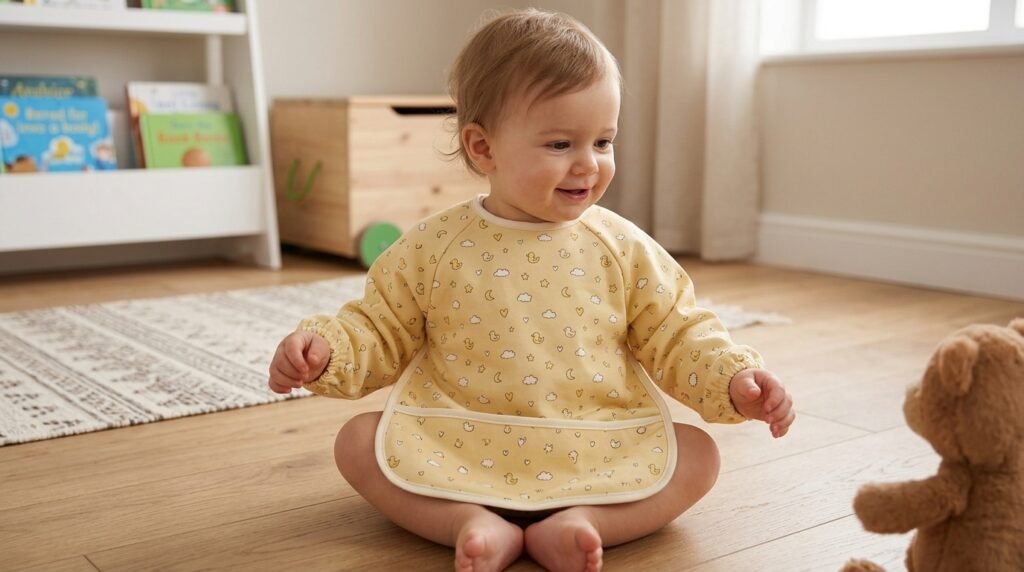
A small bib covers the chest, but food often lands on sleeves, shoulders and laps too. Long sleeve designs extend protection across these areas, making them useful during spoon feeding and independent eating.
They can also double as lightweight cover-ups for supervised painting and other messy activities. Keep a separate bib for crafts so paint and craft materials stay away from feeding items.
Full coverage does not mean a tight fit. A well-fitting bib should allow a child to bend their elbows, reach forward and sit comfortably without pulling across the shoulders.
What to Look for in a Long Sleeve Baby Bib Sewing Pattern
For a first project, choose a pattern with clearly labeled pieces, illustrated instructions and a straightforward construction order.
Helpful pattern features include:
- A size chart with finished measurements.
- Clear seam allowance information.
- Roomy sleeves with elastic cuff instructions.
- A wide front panel that covers the lap when seated.
- A simple pocket template.
- A back opening that makes dressing easier.
Check whether seam allowances are included before cutting. For a downloadable pattern, print at the stated scale and measure the test square first.
Choose the size using the pattern’s measurements rather than age alone. Babies and toddlers of the same age can need different sleeve lengths and neckline sizes.
Four Practical Features to Include
1. Elastic Sleeve Cuffs
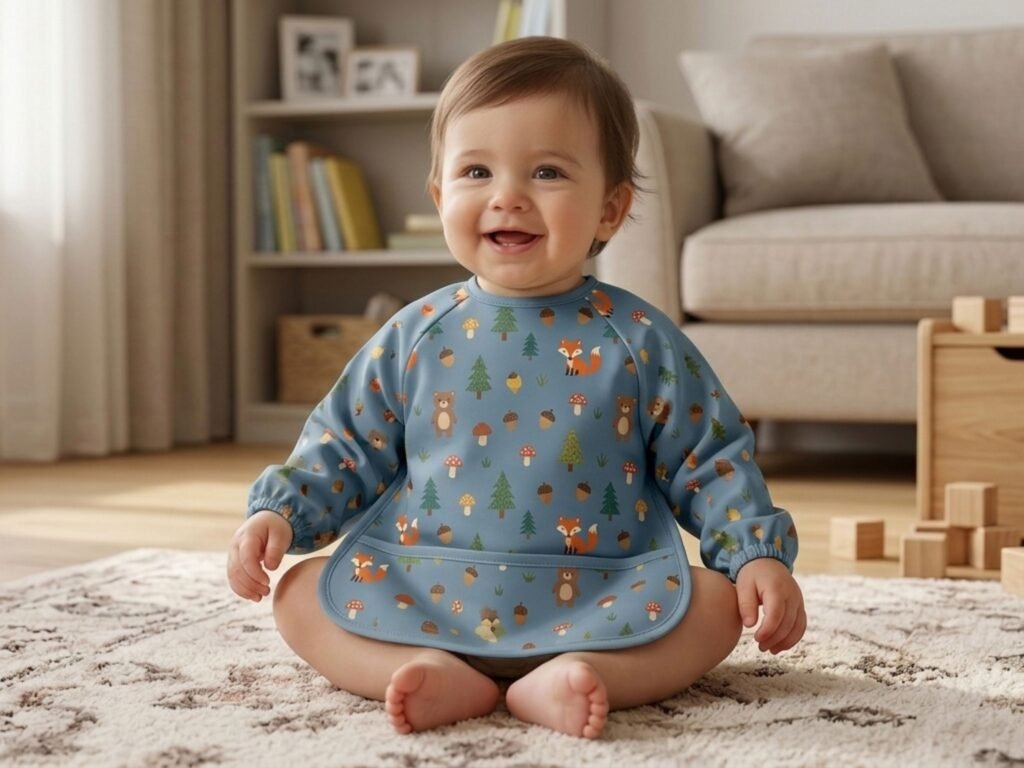
Elastic cuffs help keep sleeves near the wrists, reducing the chance of fabric dipping into food.
A simple casing is often manageable for beginners: fold and stitch the sleeve edge as directed, thread the elastic through, then secure the ends and close the opening.
Use the pattern’s elastic guide as a starting point and check the finished fit. Cuffs should sit comfortably without digging in, leaving marks or restricting movement.
2. A Large Front Pocket
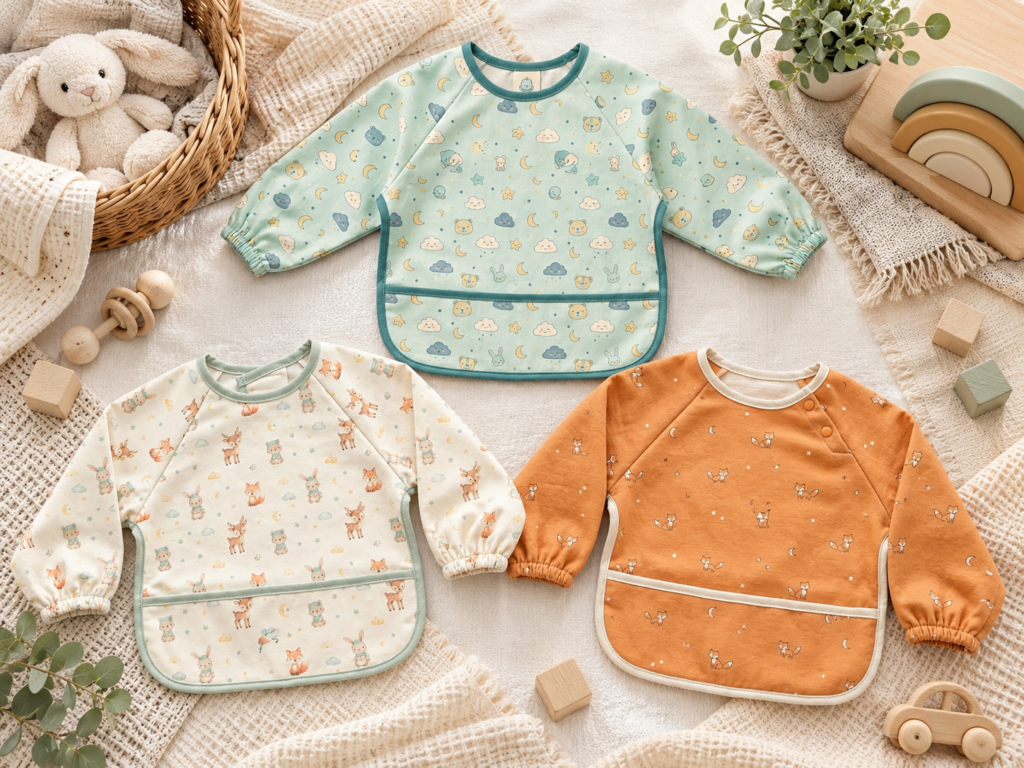
A broad catch pocket can collect some falling food before it reaches the child’s lap.
Choose a pocket that opens slightly away from the bib rather than lying completely flat. Follow the pattern’s shaping instructions to create that opening.
Finish the top edge neatly and reinforce the attachment points. Keep the pocket accessible for washing, since crumbs and food can collect in the bottom corners.
3. Comfortable Neckline Finishing
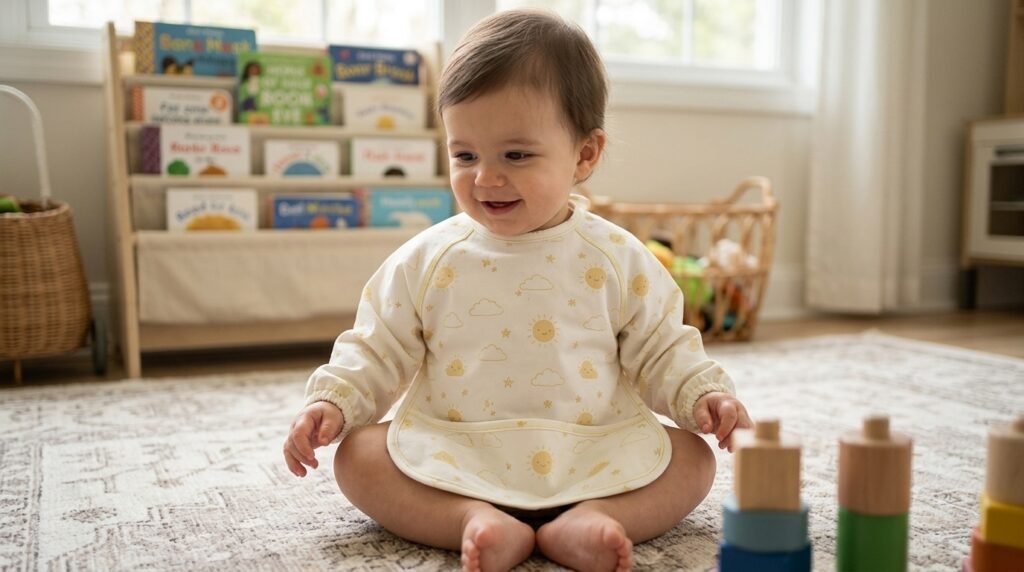
The neckline deserves extra attention because it sits close to the skin. Soft binding or a neatly enclosed edge can make the bib more comfortable.
Avoid bulky joins, exposed elastic and scratchy seam edges around the neck. When applying binding, work slowly around the curve without stretching the neckline out of shape.
The finished opening should sit comfortably without pressing against the neck or leaving an unnecessarily large gap.
4. A Back Button Closure
A back button closure allows the bib to open for dressing without pulling a food-covered neckline over the child’s head.
Use a properly finished buttonhole and reinforce the fastening area according to the pattern. Secure the button firmly and inspect it regularly: a loose button can become a choking hazard.
Keep the back opening simple, with no long ties or dangling decorations.
Best Fabrics for a Reusable Long Sleeve Feeding Bib
Fabric choice affects how the bib feels, how easily it wipes clean and how much care it needs after use. Two popular options are PUL and laminated cotton.
PUL Fabric
PUL stands for polyurethane laminate. It combines a fabric layer with a thin waterproof barrier and is commonly used in reusable sewn items.
For a feeding bib, look for a lightweight, flexible version that moves easily around the shoulders and elbows. The supplier’s specifications should explain its intended use, washing instructions and which surface should face outward.
Some PUL products are specifically tested for food contact. Check the exact product information rather than assuming every PUL fabric has the same properties. Manufacturers offer particular PUL ranges intended for bibs and direct food contact. Wazoodle Fabrics
Laminated Cotton
Laminated cotton has a cotton base with a protective laminated surface. It offers plenty of print choices and can provide a convenient wipe-clean outer face.
Before buying, check:
- How soft and flexible the fabric feels.
- Whether it is suitable for baby feeding items.
- Whether machine washing is permitted.
- Which ironing and drying restrictions apply.
- Whether its coating is suitable for the intended food contact.
Some laminated cottons feel more structured than others. A sample can help you decide whether the fabric will be comfortable as a full sleeved bib.
Does the Bib Need a Lining?
Follow the pattern’s recommendations. A lining can cover seams and create a softer inner surface, but it also adds weight and may increase drying time.
For your first bib, avoid adding extra layers unless the pattern allows for them. A lightweight construction is easier to handle and less bulky around the cuffs and neckline.
Beginner-Friendly Tips for Sewing Coated Fabrics
PUL and laminated cotton may behave differently from ordinary quilting cotton. Practise on an offcut before sewing the main pieces.
Use Clips Where Practical
Clips can hold layers together without making pinholes. If pins are necessary, keep them within the seam allowance where possible.
Test Your Stitch Settings
Try the needle and stitch settings recommended by the fabric supplier. Check that the machine feeds the layers smoothly without skipped stitches or puckering.
If the coated surface sticks under the presser foot, a compatible non-stick or walking foot may help.
Avoid Unnecessary Unpicking
Removing stitches can leave visible holes in coated fabric. Mark placement carefully and check pocket and sleeve positions before stitching.
Remember that a waterproof fabric does not automatically create a completely waterproof bib: needle holes, seams and openings can still allow moisture through.
Check Before Pressing
Do not assume coated fabrics can tolerate a hot iron. Follow the supplier’s pressing instructions and test on a scrap first.
A Simple Sewing Plan for Your First Bib
The exact assembly order depends on the pattern, but this checklist will help you prepare.
- Choose the size. Check the child’s measurements against the pattern.
- Read the instructions fully. Identify the fabric direction, seam allowances and required notions.
- Prepare the materials. Follow any supplier instructions for prewashing or preparation.
- Cut and mark the pieces. Transfer pocket placement, sleeve notches and closure markings.
- Follow the assembly sequence. Attach the pocket and sleeves at the stage specified by the pattern.
- Finish the cuffs, neckline and edges. Keep seams smooth and trim loose threads.
- Add and check the button closure. Inspect the fastening and try the fit before use.
If you are unsure about sizing, make a trial version in inexpensive fabric before cutting your chosen laminated material.
Fabric Print Ideas for Everyday Mealtimes
A useful bib can still feel cheerful and personal. Small or medium prints often work well because the design remains visible across the sleeves and pocket.
Try:
- Fruit and vegetable prints for a mealtime theme.
- Animals, woodland characters or dinosaurs.
- Dots, checks and simple geometric patterns.
- Soft florals or muted botanical prints.
- Colourful vehicles or ocean-inspired designs.
A contrasting pocket or binding can add interest without complicated sewing. Busy prints may make minor marks less noticeable, but the bib should still be cleaned after use.
Handmade Baby Gift Ideas
A reusable long sleeve bib makes a thoughtful gift because it combines a personal fabric choice with an everyday purpose.
For a simple handmade set, pair it with a coordinating washcloth or a second bib in another print. Two bibs allow one to be washed and dried while the other is available.
Include a small care card stating the size, fabric details and washing instructions. Avoid loose decorative additions such as beads, bows or appliqués that could detach.
How to Clean and Care for a Handmade Bib
Shake out crumbs and empty the pocket after each meal. Remove food residue promptly, then clean the bib according to the fabric supplier’s instructions.
Pay attention to the cuffs, binding and pocket corners, where moisture and food can collect. Allow the bib to dry completely before storing it.
Wipe cleaning can be convenient between uses when appropriate, but it does not replace thorough cleaning when seams or fabric remain soiled. Regularly inspect the coating, stitching, elastic and button, and repair damage before using the bib again.
Use the bib under adult supervision and remove it after feeding or messy play.
FAQs: Long Sleeve Baby Bib Sewing Pattern
Is a long sleeve baby bib sewing pattern suitable for beginners?
Yes. Choose a pattern with illustrated instructions, simple sleeves and clear cuff and binding guidance. Practising on fabric scraps helps when working with coated materials for the first time.
What fabric is best for a reusable feeding bib?
Lightweight PUL and flexible laminated cotton are both options. Choose the specific fabric by its intended use, comfort, cleaning requirements and supplier information.
Can I use ordinary cotton?
Ordinary cotton can absorb spills, but it does not provide the same liquid barrier as a laminated fabric. If you want a waterproof layer, use a pattern designed for that construction.
Does a full coverage toddler bib sewing pattern need a pocket?
A pocket is optional, but it can catch some dropped food. A wide opening and accessible corners make it easier to empty and clean.
Can I make the bib larger for a growing toddler?
Use the pattern’s larger sizes where available. Simply enlarging every piece can change the neckline, sleeve shape and overall fit.
Can I machine wash PUL and laminated cotton bibs?
Care requirements vary by product. Check the instructions for the exact fabric, including washing temperature, drying method and ironing restrictions.
Make a Bib That Works for Your Routine
The best long sleeve baby bib sewing pattern balances coverage, comfort and easy cleaning. Roomy sleeves, gentle elastic cuffs, a smooth neckline and a useful catch pocket can make a handmade bib easier to use every day.
Start with a clear pattern and a suitable fabric, then personalise it with a print you enjoy. A carefully made reusable bib can become a practical part of daily mealtimes—and a thoughtful handmade gift.