
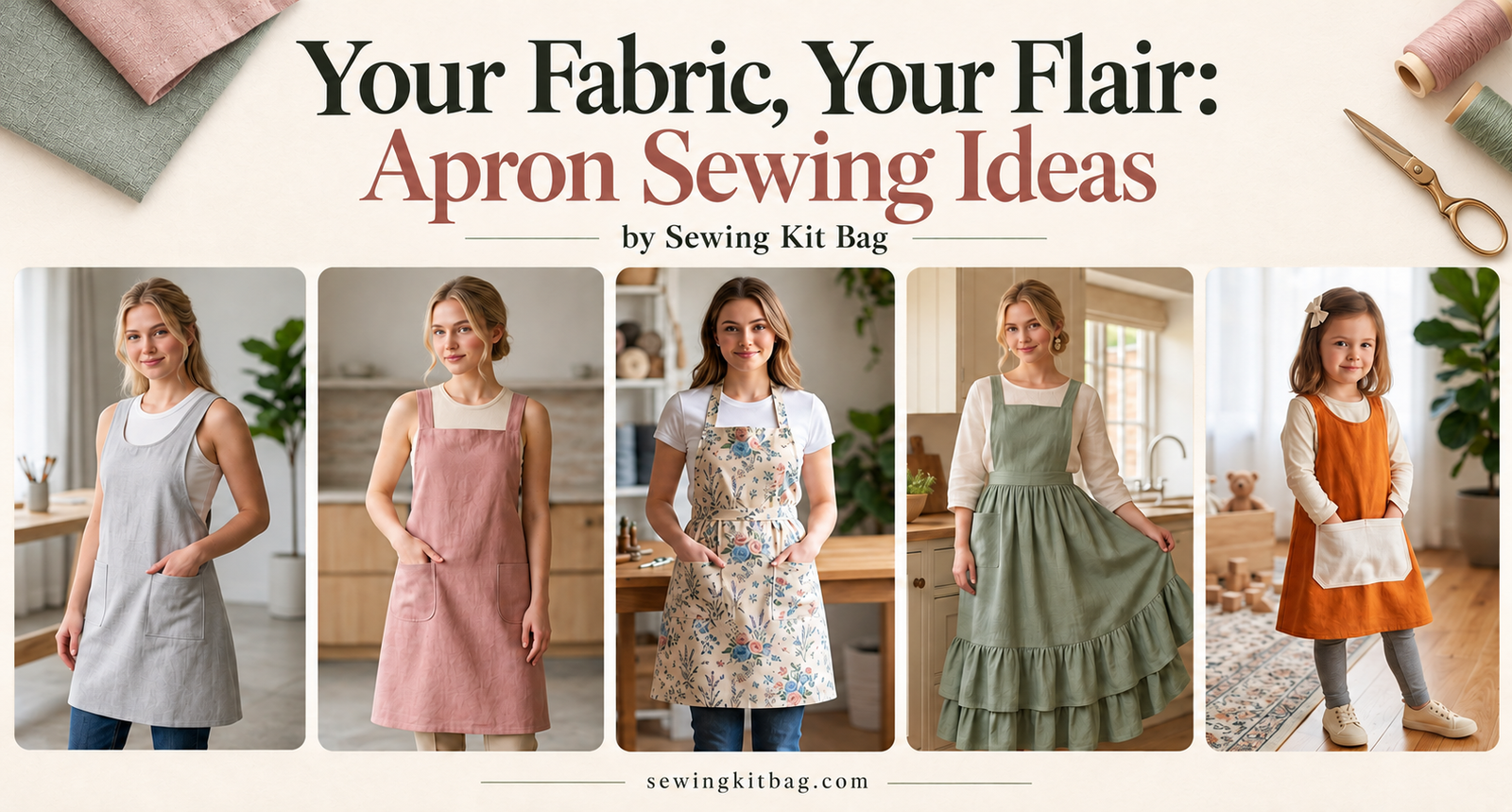
The best apron sewing ideas start with how you live. Perhaps you enjoy slow weekend baking, need a practical layer for daily cooking, or want a comfortable apron for hours spent crafting. Your choice of shape, fabric and details can turn an everyday essential into something that feels distinctly yours.
At Sewing Kit Bag, we believe creativity belongs in useful things, too. From a simple cross back design to a vintage apron finished with ruffles, there are plenty of ways to combine personality with practicality.
Whether you are making your first DIY apron or looking for a more detailed project, this guide will help you choose a style that suits your routine and sewing confidence.
Apron Sewing Ideas: Find the Shape That Fits Your Day
Before choosing fabric, consider what you want your apron to do. Do you need generous coverage while cooking? Roomy pockets for craft supplies? A lightweight layer that slips on easily?
The right shape makes a difference. Cross back aprons usually avoid neck ties, while retro and ruffled designs offer more opportunities to experiment with decorative details. However, the construction of individual apron sewing patterns varies, so always check the instructions and recommended skill level.
Round Neck Cross Back Apron: Relaxed and Easy to Wear
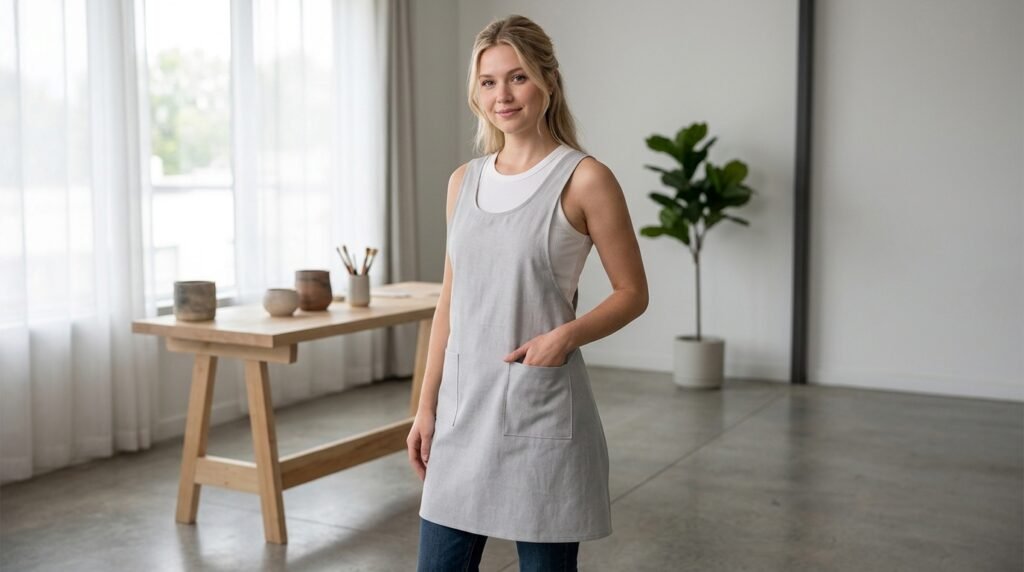
A round neck cross back apron brings a soft neckline and a relaxed look to everyday tasks. Its straps cross behind the body, and many designs slip on without fastening waist ties.
Who it suits: Home cooks, bakers, gardeners and makers who prefer a comfortable, unfussy apron.
Suitable fabrics: Medium-weight cotton, linen or a linen-cotton blend. Lightweight canvas can provide more structure if the pattern recommends it.
Everyday uses: Preparing meals, tending indoor plants, sewing and light household tasks.
Skill level: Beginner-friendly when the pattern uses simple hems and straightforward strap construction. Curved necklines, facings or binding may require additional practice.
For styling inspiration, try natural linen with contrasting pockets, small floral prints or narrow stripes. A round neck cross back apron pattern is a good option if you enjoy relaxed clothing and want an apron that feels like part of your outfit.
Square Neck Cross Back Apron: Clean Lines with Character
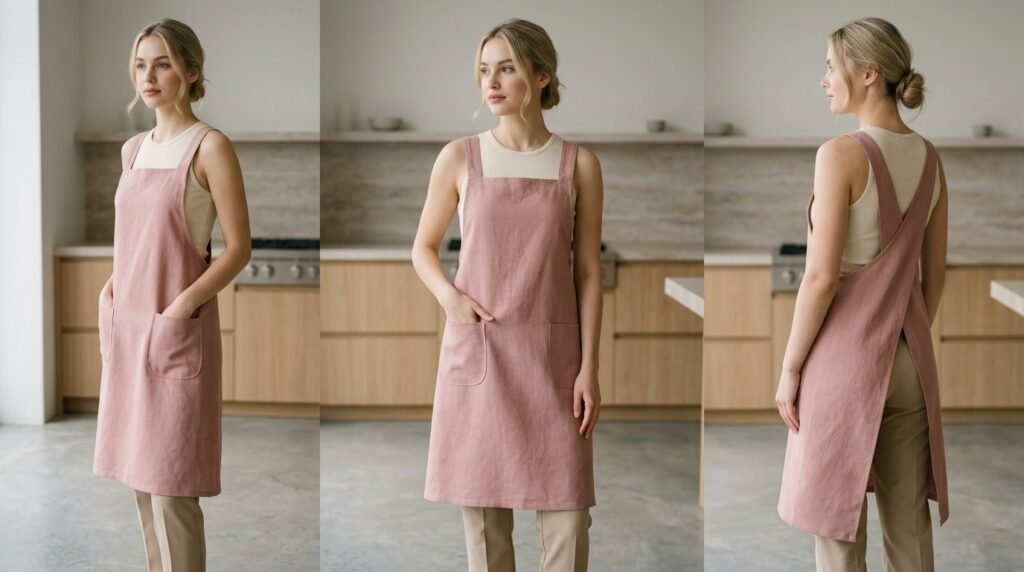
A square neck cross back apron creates a more defined silhouette. Its straight neckline offers a useful starting point for playing with colour blocking, contrasting straps or neatly placed pockets.
Who it suits: Makers who enjoy a clean, contemporary look and want practical coverage.
Suitable fabrics: Cotton twill, medium-weight linen, chambray or lightweight denim, depending on the pattern.
Everyday uses: Cooking, crafting, arranging flowers and working on creative projects.
Skill level: Beginner to intermediate. A simple version may be approachable, but neat neckline corners and lined bodices need careful stitching.
Try chambray with patterned pockets or a solid cotton fabric with contrasting topstitching. When choosing a square neck cross back apron pattern, check the finished measurements and strap placement to help achieve a comfortable fit.
Retro Style Apron: A Playful Project for the Kitchen
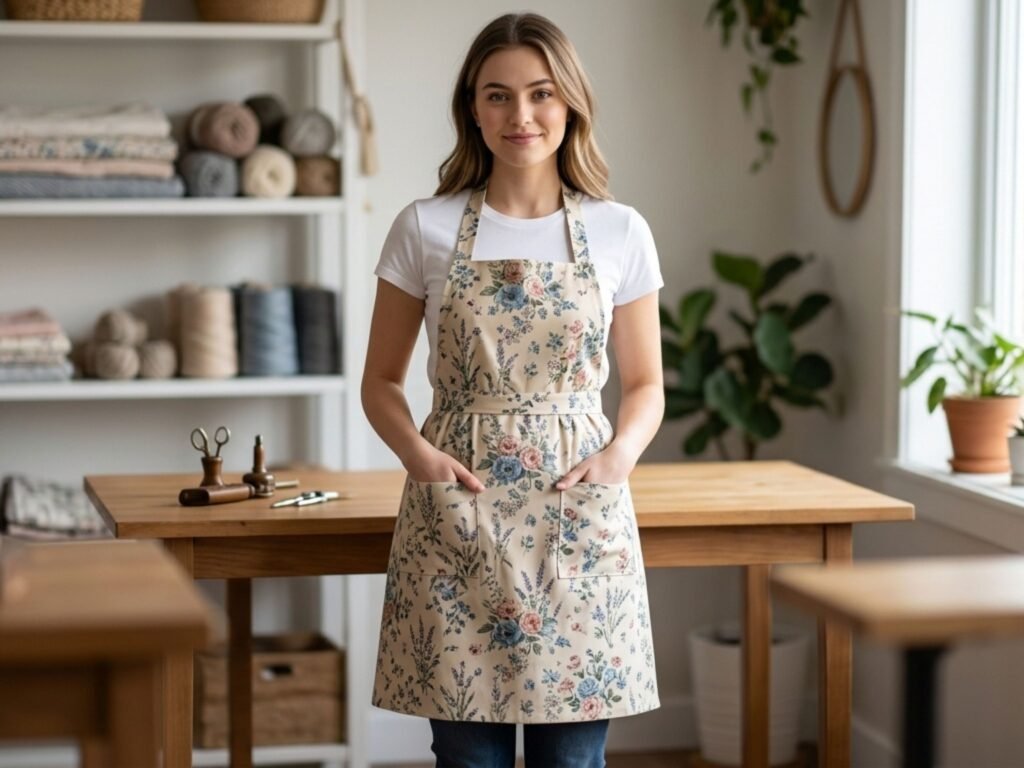
A retro style apron adds personality through details such as a shaped bib, a fuller skirt, waist ties or colourful trim. Some designs are simple, while others involve several shaped pieces.
Who it suits: Bakers, hosts and sewists who enjoy cheerful prints and a more defined waist.
Suitable fabrics: Cotton poplin, quilting cotton and other woven cottons with enough body to hold the intended shape.
Everyday uses: Baking, preparing family meals, hosting gatherings and making thoughtful handmade gifts.
Skill level: Beginner to intermediate, depending on the construction. Bias binding, curved seams and shaped bodices add complexity.
Gingham, polka dots and fruit prints work well with this style. For a quieter look, use a solid fabric and let contrasting trim provide the detail. Retro apron sewing patterns are a natural choice when you want your project to be both useful and expressive.
Vintage Ruffle Apron: Decorative Details Worth Taking Time For
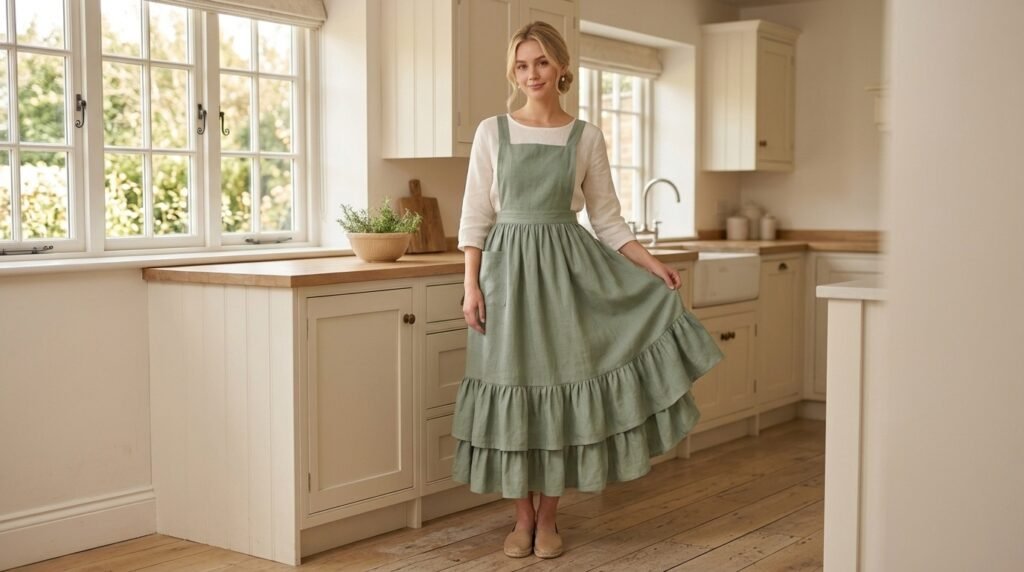
A vintage ruffle apron turns a practical garment into a more decorative sewing project. Ruffles may frame the bib, finish the hem or add detail to the pockets.
Who it suits: Sewists who enjoy romantic styling, decorative finishes and projects with a little more detail.
Suitable fabrics: Cotton lawn, lightweight cotton poplin or quilting cotton. Choose a fabric that gathers comfortably without creating bulky seams.
Everyday uses: Baking, entertaining and gifting to someone who appreciates a vintage-inspired look.
Skill level: Usually intermediate. Gathering fabric evenly and attaching ruffles neatly takes patience, especially around curves.
Combine a small floral print with plain ruffles, or use one fabric throughout for a softer effect. If you are new to gathers, practise on a fabric scrap before starting. A vintage ruffle apron pattern can help you build these skills one section at a time.
Kids Cross Back Apron: Made for Little Helpers
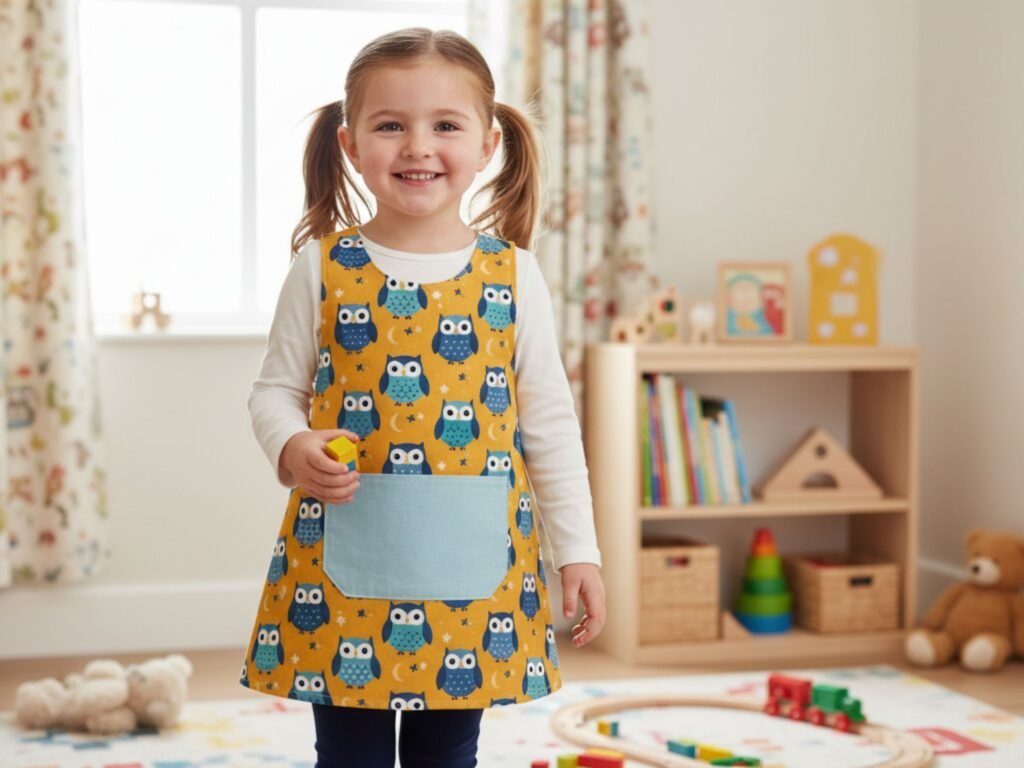
A kids cross back apron is a cheerful project for children who enjoy baking, painting or joining in with household activities. Many designs slip on without ties, making them easier to put on with help.
Who it suits: Young kitchen helpers and children who enjoy supervised creative activities.
Suitable fabrics: Soft, washable cotton or a lightweight cotton twill. Choose fabric according to the pattern and the intended activity.
Everyday uses: Supervised baking, gardening, painting and craft sessions.
Skill level: Beginner-friendly for a simple design, though smaller straps and curved edges still require care.
Try animal prints, bright stripes or a pocket in the child’s favourite colour. Choose a kids cross back apron pattern in the correct size rather than simply shrinking an adult design. Keep straps well fitted and avoid loose decorations that could catch or detach.
Choosing Suitable Fabrics for Your DIY Apron
An attractive print matters, but fabric weight, feel and care requirements will affect how often you use your apron.
Cotton for Everyday Versatility
Woven cotton is a practical starting point for many apron projects. It is generally manageable to cut and sew, and it comes in a wide range of prints.
Quilting cotton can suit decorative designs, while cotton twill offers a firmer feel for an apron that needs more structure.
Linen for a Relaxed Finish
Linen adds texture and a relaxed appearance to cross back styles. It creases naturally, which can be part of its appeal. A linen-cotton blend offers another option if you like the look but prefer a slightly different feel.
Denim or Canvas for More Structure
Lightweight denim and canvas can suit practical aprons with useful pockets. Check that the pattern supports the fabric weight: several layers at straps and pocket corners can become bulky.
Lighter Fabrics for Ruffles and Gathers
Lightweight woven cottons are often easier to gather neatly than stiff, heavy fabrics. Avoid choosing a fabric that is too sheer or delicate for the apron’s intended use.
Follow the pattern’s fabric recommendations, and prewash washable fabric according to its care instructions before cutting. This helps account for shrinkage before the apron is sewn.
Beginner or Intermediate: Choose a Project You Can Enjoy
A good beginner apron pattern should offer clear instructions, manageable construction and a fit that does not require extensive adjustments.
For an approachable first project, look for:
- A small number of pattern pieces.
- Simple hems and straps.
- Minimal gathers or decorative trim.
- Clear diagrams for assembly.
- Optional pockets that you can add once you feel confident.
A simple round neck or square neck cross back design may be a suitable starting point, but check how its neckline and edges are finished.
Intermediate sewists can explore shaped retro aprons, vintage ruffles, lined sections and decorative binding. These details provide opportunities to practise accuracy and finishing techniques.
Choose complexity because you want to learn it—not because a more detailed apron is automatically a better one.
Handmade Apron Ideas That Feel Personal
Small changes can give a familiar pattern a fresh identity. These handmade apron ideas let you customise your project without redesigning it completely.
Give Your Pockets a Purpose
Think about what you regularly reach for. A divided pocket might suit craft tools, while a roomy patch pocket can hold small everyday items. Check placement before stitching so the pockets are comfortable to reach.
Use Contrast Thoughtfully
Try patterned pockets on a plain apron, contrasting straps or a narrow strip of colourful binding. One well-chosen detail can make the whole design feel considered.
Add a Personal Touch
An embroidered initial or a small stitched motif can make an apron feel special. Keep decoration away from areas where it could interfere with washing or everyday use.
Make Coordinated Adult and Child Aprons
Coordinating fabrics can create a lovely set for family baking sessions. Use separate adult and child patterns so each apron fits appropriately.
Explore Fabric You Already Own
A suitable length of leftover cotton or sound fabric from an older garment may work for an apron project. Check its condition, weight and available dimensions before committing to a pattern.
Choose the Apron That Fits Your Lifestyle
Picture an ordinary day before choosing your next project.
If you cook regularly, washable fabric and comfortable coverage may matter most. If you spend time crafting, pocket placement could guide your choice. For a gift, consider the recipient’s taste, routine and preferred fit.
Your sewing experience matters, too. A simple apron made carefully can be just as satisfying as a detailed design with ruffles and trim.
At Sewing Kit Bag, the inspiration begins with your own preferences. Use these apron sewing ideas to explore round neck cross back, square neck cross back, retro, vintage ruffle and kids cross back styles—and choose a related pattern with the construction and features you need.
Your fabric brings the colour. Your choices bring the flair.
Frequently Asked Questions
What is the best apron style for a beginner?
A simple apron with few pieces, straightforward hems and clear instructions is a good starting point. Some cross back designs are beginner-friendly, but check whether they require binding, facings or more complex neckline construction.
Which fabric should I use for an everyday apron?
Medium-weight woven cotton is a versatile option for many everyday aprons. Linen, cotton twill and lightweight denim may also work, depending on the pattern and how you plan to use the apron.
Can I sew an apron without a pattern?
A basic apron can be made from measurements, but a pattern provides guidance on fit, seam allowances and assembly. This is particularly helpful for cross back designs and shaped bodices.
Are vintage ruffle aprons suitable for beginners?
A confident beginner may manage a simple version with detailed instructions. Designs with several ruffles, curved seams or decorative binding are usually better suited to someone with more sewing practice.
How do I choose the right apron sewing pattern?
Compare the pattern’s skill level, sizing, coverage, fabric recommendations and finishing methods. Then choose the design that matches your everyday needs and the techniques you want to practise.