
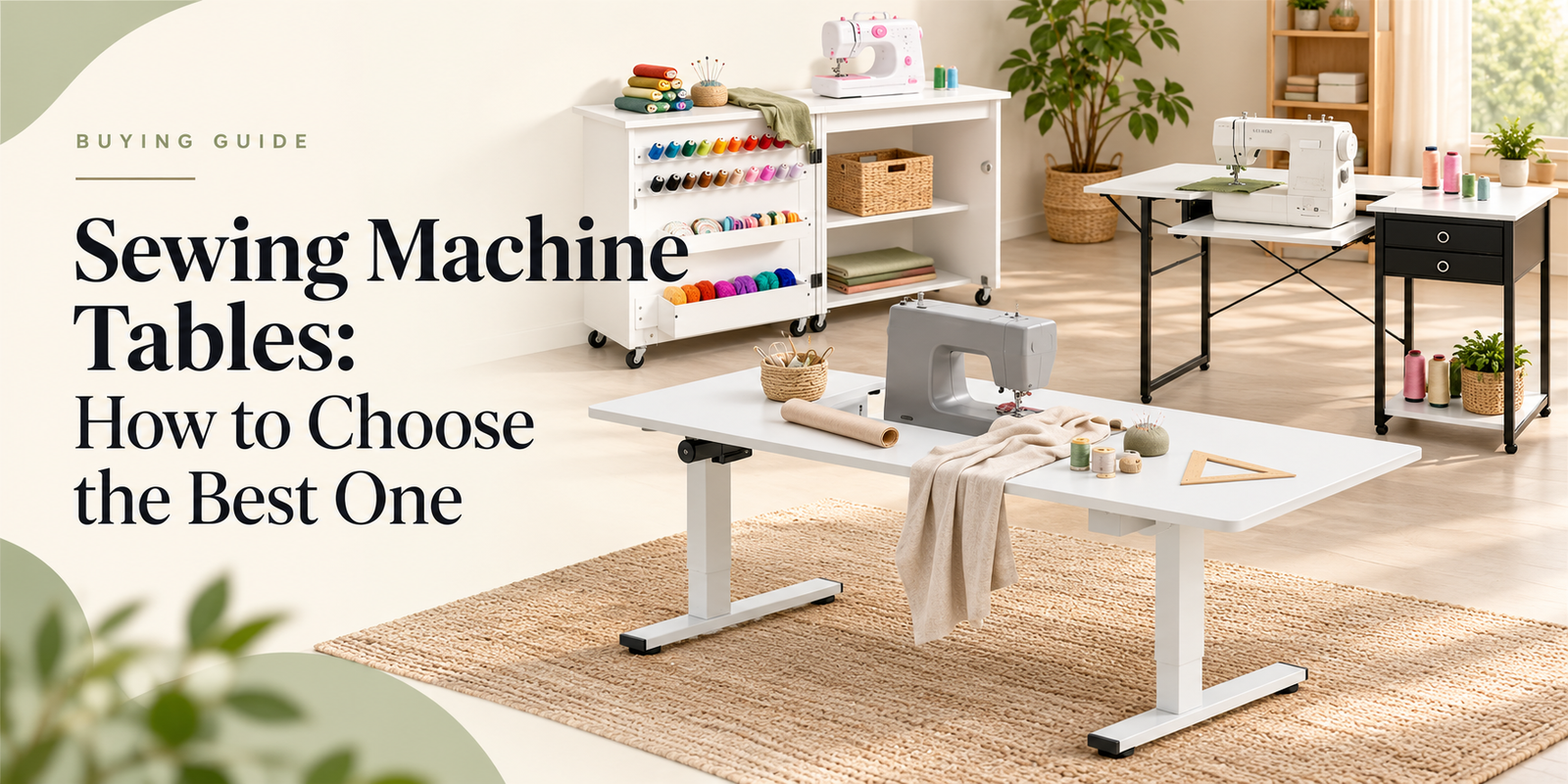
Sewing Machine Tables: How to Choose the Best One
Sewing Machine Tables: Choosing the right sewing machine tables can make a big difference in your sewing experience. Whether you are a beginner learning basic stitches or an experienced sewer working on quilting and garment projects, a suitable sewing table provides stability, comfort, and enough workspace to handle your projects efficiently.
With so many options available, including folding sewing machine tables, sewing cabinets, portable workstations, and heavy-duty tables, finding the right one can feel overwhelming. The best choice depends on your sewing machine, available space, budget, storage needs, and preferred working position.
In this guide, you will learn how to choose the best sewing machine table, which features to consider, and what to check before making a purchase.
What Is a Sewing Machine Table?
A sewing machine table is a dedicated workspace designed to support a sewing machine and provide room for fabric handling, accessories, and other sewing essentials. Unlike an ordinary desk, a purpose-built sewing table may include machine mounting options, storage compartments, adjustable height, or a foldable design.
A good sewing workstation helps keep your machine stable while giving you enough space to guide fabric smoothly through the stitching process.
Benefits of Using a Dedicated Sewing Table
A dedicated sewing table offers several benefits for beginners and experienced sewers.
-
- Better stability: A sturdy table helps reduce unwanted movement during sewing.
-
- Improved comfort: The right table height supports a more comfortable working position.
-
- More workspace: A suitable tabletop gives you room to handle fabric and larger projects.
-
- Better organization: Drawers, shelves, and compartments keep accessories within reach.
-
- Efficient use of space: Folding and compact designs work well in smaller homes.
-
- A dedicated creative area: A permanent sewing station makes it easier to start and finish projects.
Types of Sewing Machine Tables
Before buying a sewing table, consider the different designs available. Each type offers advantages for particular sewing needs and room layouts.
1. Folding Sewing Machine Tables
Folding sewing machine tables are ideal for people who have limited space or do not sew every day. These tables can be folded or stored when not in use, helping you maintain a clutter-free room.
Look for a secure folding mechanism, a stable frame, adequate tabletop space, and locking wheels if the table is mobile.
Best for: Beginners, apartment dwellers, and occasional sewing projects.
2. Sewing Machine Cabinets
A sewing machine cabinet combines a workspace with built-in storage. Some models feature a lift mechanism that allows the machine to move between storage and sewing positions.
These cabinets can provide a more organized and permanent sewing station. However, check the cabinet dimensions and machine compatibility before buying, especially if you want an inset or flush-mounted machine.
Best for: Dedicated sewing rooms and people who want integrated storage.
3. Portable Sewing Machine Tables
Portable sewing tables are designed to move easily between rooms or work areas. Depending on the design, they may include lightweight construction, wheels, folding legs, or compact storage.
If you choose a model with wheels, make sure they lock securely during use. Portability should not come at the expense of stability.
Best for: Shared rooms, flexible workspaces, and people who need to move their sewing setup regularly.
4. Heavy-Duty Sewing Machine Tables
Heavy-duty sewing machine tables are designed for demanding projects or machines that require a particularly stable work surface. Some are intended for industrial sewing machines and may have reinforced frames or dedicated machine mounts.
Before purchasing, check the manufacturer’s stated weight capacity, tabletop dimensions, frame construction, and compatibility with your machine.
Best for: Frequent sewing, heavier machines, and demanding workloads.
5. Quilting Sewing Tables
Quilting often requires extra room to support bulky fabric, batting, and partially completed projects. A quilting sewing table may provide an extended surface or additional space around the machine.
Consider how much room you need to support fabric without pulling or dragging it. If you also cut large pieces of fabric, a separate cutting table may be useful.
Best for: Quilters, patchwork enthusiasts, and people who work on large fabric projects.
6. Adjustable-Height Sewing Tables
Adjustable sewing tables allow you to change the working height to suit your preferred sitting or standing position. Some models offer manual adjustment, while others use powered mechanisms.
Check the available height range, adjustment method, stability at different heights, and whether the tabletop accommodates your machine.
Best for: People who want a flexible sewing workstation or need to alternate between sitting and standing.
How to Choose the Best Sewing Machine Table
Choosing the best sewing machine table involves more than comparing appearance and price. The following factors can help you select a table that suits your machine and sewing habits.
1. Check the Table Size and Dimensions
The size of your sewing table should match both your machine and your available room space. A compact table may be sufficient for basic repairs, while quilting and garment-making often require more room to support fabric.
Before purchasing, measure the width, depth, and height of your sewing machine. Consider the tabletop area needed to operate the machine comfortably, the floor space available in your room, and the clearance required for your knees and chair.
Remember that a table that fits your sewing machine may still be too small for your projects. Consider how much fabric you need to support while stitching.
2. Look for a Sturdy and Stable Construction
A stable sewing table helps keep your machine secure during operation. Excessive wobbling or vibration can make sewing less comfortable, particularly when working at higher speeds.
Materials commonly used in sewing tables include engineered wood, solid wood, metal, and combinations of these materials.
When comparing construction, look for a rigid frame, secure joints, reliable legs, and a tabletop that does not flex excessively under load. The overall design matters just as much as the material.
If you use a heavy machine, confirm the manufacturer’s stated weight capacity rather than relying on appearance alone.
3. Consider Storage and Organization
A sewing machine table with storage can make your workspace more practical. Drawers, shelves, and compartments help keep frequently used supplies close to the machine.
Useful storage features may include drawers for scissors and needles, shelves for fabric and sewing patterns, compartments for machine accessories, and space for thread spools and small sewing tools.
Choose storage based on the items you actually use. A compact table with well-planned compartments may be more useful than a larger model with storage that is difficult to access.
4. Choose a Comfortable Working Height
The correct sewing machine table height helps you maintain a comfortable working position. A table that is too high or too low may encourage awkward shoulder, wrist, or back positions.
When seated, aim to keep your shoulders relaxed and your elbows comfortably positioned while operating the machine. Your chair height, pedal position, and machine design also affect overall comfort.
An adjustable-height sewing table can provide more flexibility, but it is important to check that the table remains stable throughout its adjustment range.
5. Check Sewing Machine Compatibility
Not every sewing machine fits every sewing table. This is especially important when purchasing a cabinet with an inset opening or a lift mechanism.
Before ordering, verify your machine’s dimensions, the size of any machine opening or mounting platform, and whether a compatible insert or adapter is required. If the table includes a machine lift, confirm that it supports your model and its weight.
If you own a computerized, heavy-duty, or industrial sewing machine, check the manufacturer’s specifications carefully. Do not assume that a universal-looking table will fit every model.
6. Decide Whether You Need a Folding or Fixed Table
A folding sewing machine table is useful when you need to reclaim floor space after sewing. A fixed table or sewing cabinet may be more convenient if you use your machine frequently and want a dedicated workstation.
Consider how often you sew, whether you need to move the table, and how much time you want to spend setting up and putting away your equipment.
For a shared living space, a compact folding model may be the most practical choice. For a dedicated sewing room, a larger fixed workstation may provide more convenience.
7. Set a Realistic Budget
Sewing machine tables are available in different price ranges, depending on their materials, dimensions, storage, and additional features.
When comparing prices, consider the total value rather than choosing the cheapest option automatically. A well-built table that fits your machine and supports your projects may be a better long-term purchase.
Compare construction quality, stated weight capacity, storage options, assembly requirements, machine compatibility, delivery charges, return policies, and warranty coverage.
Prices and product availability can change, so check current retailer listings before purchasing.
Best Sewing Machine Tables for Different Needs
The best table depends on how you sew and the space available to you.
Best Sewing Machine Table for Beginners
Beginners usually benefit from a straightforward sewing table with a stable frame, a comfortable working height, and enough space for basic sewing projects. A simple design can make setup and everyday use easier without adding unnecessary features.
Best Sewing Machine Table for Small Spaces
A folding sewing table or compact sewing desk can be a practical option for apartments, bedrooms, and shared rooms. Look for a design that stores easily without compromising stability when the machine is running.
Best Sewing Machine Table for Quilting
Quilters often need extra room to support large fabric pieces and bulky projects. Consider an extended tabletop or a dedicated quilting workstation that provides adequate fabric support.
Best Heavy-Duty Sewing Machine Table
If you use a heavier sewing machine or sew frequently, prioritize a rigid frame, secure joints, and a verified weight capacity. Check whether the table is designed for domestic or industrial equipment.
Best Sewing Machine Table with Storage
A sewing table with drawers, shelves, or enclosed compartments can help keep your workspace organized. Choose a storage layout that makes frequently used accessories easy to reach.
Sewing Machine Table vs. Sewing Cabinet: Which Is Better?
A sewing machine table and a sewing cabinet can both provide a useful workspace, but they serve slightly different needs.
A sewing table is often simpler and may offer a larger open work surface for its footprint. It can be a practical option if you want flexibility or already have separate storage.
A sewing cabinet generally combines the work surface with enclosed storage and may include a machine lift or recessed mounting area. This can create a more integrated setup, although some cabinets take up more room and cost more.
Choose a sewing table if you prefer a straightforward workspace or need a flexible arrangement. Consider a sewing cabinet if storage, machine access, and a dedicated sewing station are your main priorities.
In either case, verify the dimensions and machine compatibility before purchasing.
Common Mistakes to Avoid When Buying a Sewing Machine Table
Avoiding a few common mistakes can help you choose a table that remains useful over time.
Ignoring Machine Dimensions
Always measure your machine and compare the measurements with the table specifications. This is particularly important for inset tables and cabinets with lift mechanisms.
Choosing Appearance Over Stability
An attractive table is not necessarily stable enough for your machine. Check the frame, joints, weight rating, and available product reviews before making a decision.
Overlooking Workspace Requirements
A table may fit the machine but leave too little room for fabric. Consider your typical projects before deciding how much surface area you need.
Forgetting Storage Needs
If you use many accessories, consider where they will be stored. A table with suitable drawers or shelves can make your sewing routine more organized.
Buying Without Checking Assembly and Returns
Some sewing tables require substantial assembly. Review the assembly instructions, delivery details, return policy, and warranty before placing an order.
Sewing Machine Table Buying Checklist
Use this checklist to compare options before making your final decision.
-
- The table fits my sewing machine.
-
- The tabletop provides enough room for my projects.
-
- The table has an appropriate weight capacity.
-
- The frame and legs feel stable and secure.
-
- The working height suits my chair and sewing position.
-
- Storage meets my needs.
-
- The design fits my available floor space.
-
- Wheels, if included, have reliable locking mechanisms.
-
- Any inset opening or lift mechanism is compatible with my machine.
-
- I have checked the price, delivery, warranty, and return policy.
A table that meets your essential requirements is generally a better choice than one that offers extra features you may never use.
Frequently Asked Questions About Sewing Machine Tables
1. What Is the Best Table for a Sewing Machine?
The best sewing machine table is sturdy, appropriately sized, comfortable to use, and compatible with your machine. A compact folding table works well in small spaces, while a larger fixed table may suit frequent sewing and quilting.
2. What Size Should a Sewing Machine Table Be?
The ideal size depends on your machine, the projects you sew, and your available space. Measure the machine and allow enough additional room for fabric handling, accessories, and comfortable seating.
3. Can I Use a Regular Desk as a Sewing Table?
Yes, a regular desk can work if it has a suitable height, a stable frame, enough surface area, and adequate weight capacity. Check that the desk remains stable during sewing and provides comfortable access to the foot pedal.
4. Are Folding Sewing Machine Tables Sturdy?
Some folding sewing tables are sturdy enough for regular home sewing, but stability varies by design and construction. Check the frame, locking mechanisms, weight rating, and product reviews before buying.
5. Do All Sewing Machines Fit Sewing Machine Tables?
No. Standard tabletop use may accommodate many machines, but recessed openings, inserts, and lift systems can have specific compatibility requirements. Always compare your machine’s dimensions with the manufacturer’s specifications.
6. Is a Sewing Machine Cabinet Better Than a Sewing Table?
Neither is always better. A cabinet may provide integrated storage and machine mounting, while a basic sewing table may offer a simpler and more flexible workspace. Choose according to your space, budget, and sewing habits.
7. What Features Should I Look for in a Sewing Table?
Prioritize stability, suitable dimensions, comfortable height, sufficient weight capacity, machine compatibility, and appropriate storage. Folding mechanisms, wheels, or adjustable height may be useful depending on your needs.
8. What Is the Best Sewing Machine Table for Quilting?
A quilting table should provide enough room to support larger fabric pieces and maintain a stable sewing surface. An extended tabletop or a dedicated quilting workstation may be useful, depending on your projects and machine.
Conclusion
Choosing the right sewing machine tables starts with understanding your machine, workspace, and sewing habits. A compact folding table can be ideal for small rooms, while a stable heavy-duty workstation may be better for frequent sewing or larger machines. If organization is important, consider a sewing cabinet or a table with practical storage features.
Before buying, compare the dimensions, weight capacity, working height, construction quality, and machine compatibility. These factors will help you find a sewing machine table that supports comfortable, organized, and efficient sewing for years to come.