
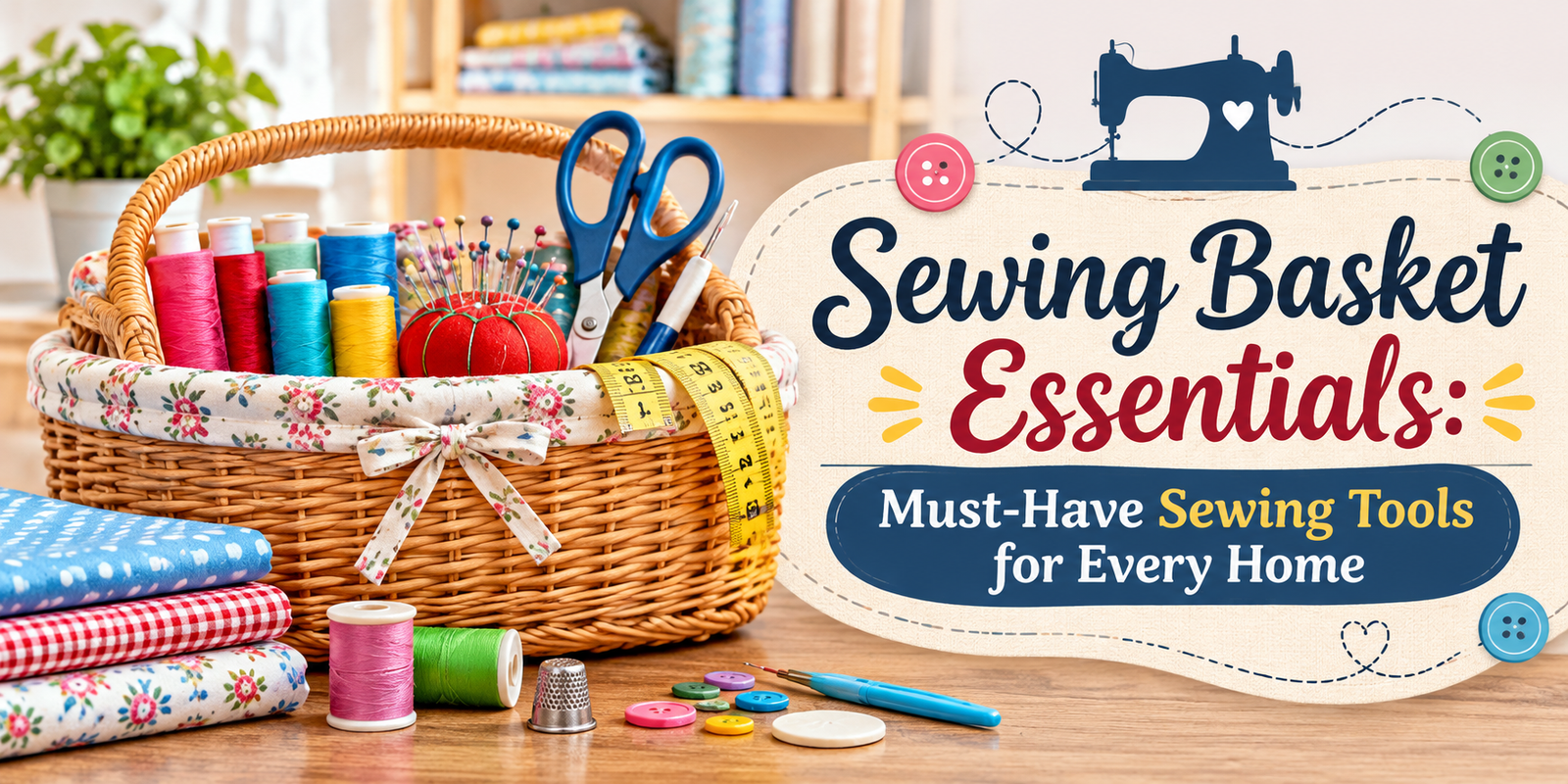
Sewing Basket Essentials: Must-Have Sewing Tools for Every Home
Sewing Basket Essentials: Whether you are a beginner learning to sew or an experienced sewing enthusiast, having a well-organized sewing basket at home is always useful. From fixing a loose button to repairing a torn seam, a basic sewing kit can help you handle small clothing emergencies without visiting a tailor.
Keeping all your essential sewing supplies in one place saves time, reduces frustration, and makes everyday sewing tasks much easier.
In this guide, we will explore the most important sewing basket essentials that every home should have, along with tips for choosing and organizing your sewing tools.
Why Does Every Home Need a Sewing Basket?
A sewing basket is a convenient place to store your basic sewing supplies. It allows you to find the right tool whenever you need to make a quick repair or work on a small DIY sewing project.
A well-stocked sewing basket is especially helpful for:
- Repairing torn seams and small holes.
- Replacing missing or loose buttons.
- Fixing hems and loose threads.
- Making minor clothing adjustments.
- Completing simple sewing and craft projects.
You do not need an expensive sewing basket. A storage box, craft organizer, or compartmentalized tackle box can work perfectly. Choose one with enough space to keep your sewing supplies organized and easy to access.
10 Essential Items Every Sewing Basket Should Have
If you are putting together your first sewing kit, start with these ten useful sewing tools.
1. Sharp Sewing Scissors
A good pair of sharp sewing scissors is one of the most important tools in any sewing basket. They help you cut fabric smoothly and accurately, making your sewing projects easier and more professional-looking.
Dull scissors can damage fabric edges and make cutting unnecessarily difficult.
Helpful tip: Keep your fabric scissors separate from household scissors. Using them to cut paper can make the blades dull faster.
2. A Variety of Sewing Needles and Pins
Different fabrics and sewing tasks require different types of needles. Keeping a selection of hand-sewing needles in different sizes will help you handle everything from lightweight fabrics to thicker materials.
You should also keep plenty of straight pins in your sewing basket. Pins are useful for holding fabric layers together before stitching.
Consider including:
- Fine needles for lightweight fabrics.
- Larger needles for thicker materials.
- Embroidery needles for decorative stitching.
- Ballpoint needles for knitted fabrics.
- Straight pins for securing fabric pieces.
Choose the appropriate needle for your fabric to achieve cleaner stitching.
3. Magnetic Pin Holder
A magnetic pin holder is a practical addition to your sewing supplies. It keeps pins and needles together and makes them easier to collect after sewing.
Unlike traditional fabric pincushions, magnetic holders can attract loose metal pins from your work surface.
This simple tool can help keep your sewing area organized and reduce the risk of accidentally stepping on a dropped pin.
4. Sewing Threads in Different Colors
No sewing basket is complete without a good selection of sewing threads. Keeping different colors available means you can match your thread to your fabric whenever a repair is needed.
For everyday sewing, consider stocking:
- Black thread.
- White thread.
- Beige and neutral thread.
- Navy blue thread.
- Brown thread.
- Red and other commonly used colors.
You can also keep specialty threads, such as denim thread, if you frequently repair jeans or work with heavier fabrics.
Choose good-quality thread to achieve durable and neat stitches.
5. Stitch Gauge and Measuring Tape
Accurate measurements are essential for successful sewing projects. A stitch gauge is a small measuring tool with a sliding marker that helps you measure hems, seam allowances, and short distances.
A flexible measuring tape is another useful addition, especially when measuring body sizes, fabric lengths, and garment dimensions.
Both tools are valuable for beginners and experienced sewists.
6. Tailor’s Chalk or Fabric Marking Pen
Tailor’s chalk is used to make temporary markings on fabric. It helps you identify cutting lines, stitching guides, darts, and other important points before sewing.
Fabric marking pens and washable fabric markers are also useful alternatives.
Always test your marking tool on a small fabric area first to ensure the marks can be removed safely.
7. Anti-Fray Solution
Some fabrics tend to unravel or fray along their cut edges. An anti-fray solution can help prevent this problem by sealing the fabric edges.
It is particularly useful when working with delicate or loosely woven fabrics.
Follow the manufacturer’s instructions and test the product on a fabric scrap before applying it to your finished project.
8. Pinking Shears
Pinking shears are special fabric scissors with zigzag-shaped blades. They create a zigzag edge when cutting fabric, which can help reduce fraying on some woven materials.
They are especially useful for finishing raw edges when a traditional seam finish is not required.
Remember that pinking shears are not suitable for every fabric or project, but they can be a valuable addition to your sewing collection.
9. Elastic Threader or Elastic Puller
If you enjoy sewing waistbands, skirts, trousers, or comfortable clothing, an elastic threader can make your work much easier.
This tool helps guide elastic through fabric casings without twisting or getting stuck.
It is inexpensive, easy to use, and particularly helpful for beginner sewing projects involving elastic.
10. Seam Ripper
A seam ripper is one sewing tool you should never overlook. Mistakes are a normal part of sewing, especially when you are learning new techniques.
A seam ripper helps you remove unwanted stitches without unnecessarily damaging the fabric.
It is useful when correcting uneven seams, removing incorrect stitching, or replacing a zipper.
Keep one in your sewing basket so you can easily fix mistakes whenever they happen.
Additional Sewing Supplies Worth Keeping
Apart from the essential tools listed above, a few extra items can make your sewing basket even more useful.
Consider adding:
- Buttons: Keep a small collection of different button sizes for quick clothing repairs.
- Safety pins: Useful for temporary fabric fastening and quick fixes.
- Thimble: Protects your fingers when pushing needles through thicker fabrics.
- Needle threader: Makes threading small sewing needles easier.
- Seam gauge: Helps measure seam allowances and hems accurately.
- Small storage bags: Keep tiny sewing accessories organized.
These additional supplies are especially helpful if you regularly sew or repair clothing at home.
Tips for Organizing Your Sewing Basket
Having the right tools is important, but keeping them organized is equally valuable.
Here are a few simple ways to maintain an organized sewing basket:
- Use separate compartments: Store scissors, needles, pins, and threads in different sections.
- Arrange threads by color: This makes it easier to find matching thread quickly.
- Keep sharp tools protected: Use covers for scissors and secure storage for needles.
- Check your supplies regularly: Replace empty thread spools and damaged needles.
- Store small accessories together: Use small containers or zip-lock bags for buttons, hooks, and other tiny items.
A little organization can save you plenty of time whenever a sewing emergency occurs.
Final Thoughts: Sewing Basket Essentials
Creating a well-stocked sewing basket does not have to be expensive or complicated. With a few essential tools, you can handle everyday clothing repairs, complete simple sewing projects, and develop your sewing skills with confidence.
Start with the basics, including sharp scissors, needles, pins, threads, measuring tools, tailor’s chalk, and a seam ripper. As you gain experience, you can add more specialized sewing accessories to your collection.
A well-organized sewing basket is a small investment that can make everyday sewing tasks much easier.
Whether you are fixing a missing button just before an event or starting your next DIY project, having the right sewing essentials within reach will always come in handy.
FAQs: Sewing Basket Essentials
1. What are the most important sewing basket essentials?
The most important sewing basket essentials include sharp scissors, sewing needles, straight pins, thread, a measuring tape, tailor’s chalk, a seam ripper, and a pin holder.
2. What should a beginner keep in a sewing kit?
Beginners should start with basic sewing supplies such as needles, thread, scissors, pins, a measuring tape, a needle threader, and a seam ripper.
3. Can I use a regular box as a sewing basket?
Yes! You can use any suitable storage box, craft organizer, or compartmentalized container. It should be sturdy and provide enough space to organize your sewing tools.
4. Why do I need a seam ripper?
A seam ripper helps remove unwanted stitches and correct sewing mistakes without unnecessarily damaging the fabric.
5. How should I organize my sewing supplies?
Use separate compartments for needles, pins, scissors, threads, and other accessories. Keep sharp tools protected and arrange small items in individual containers