
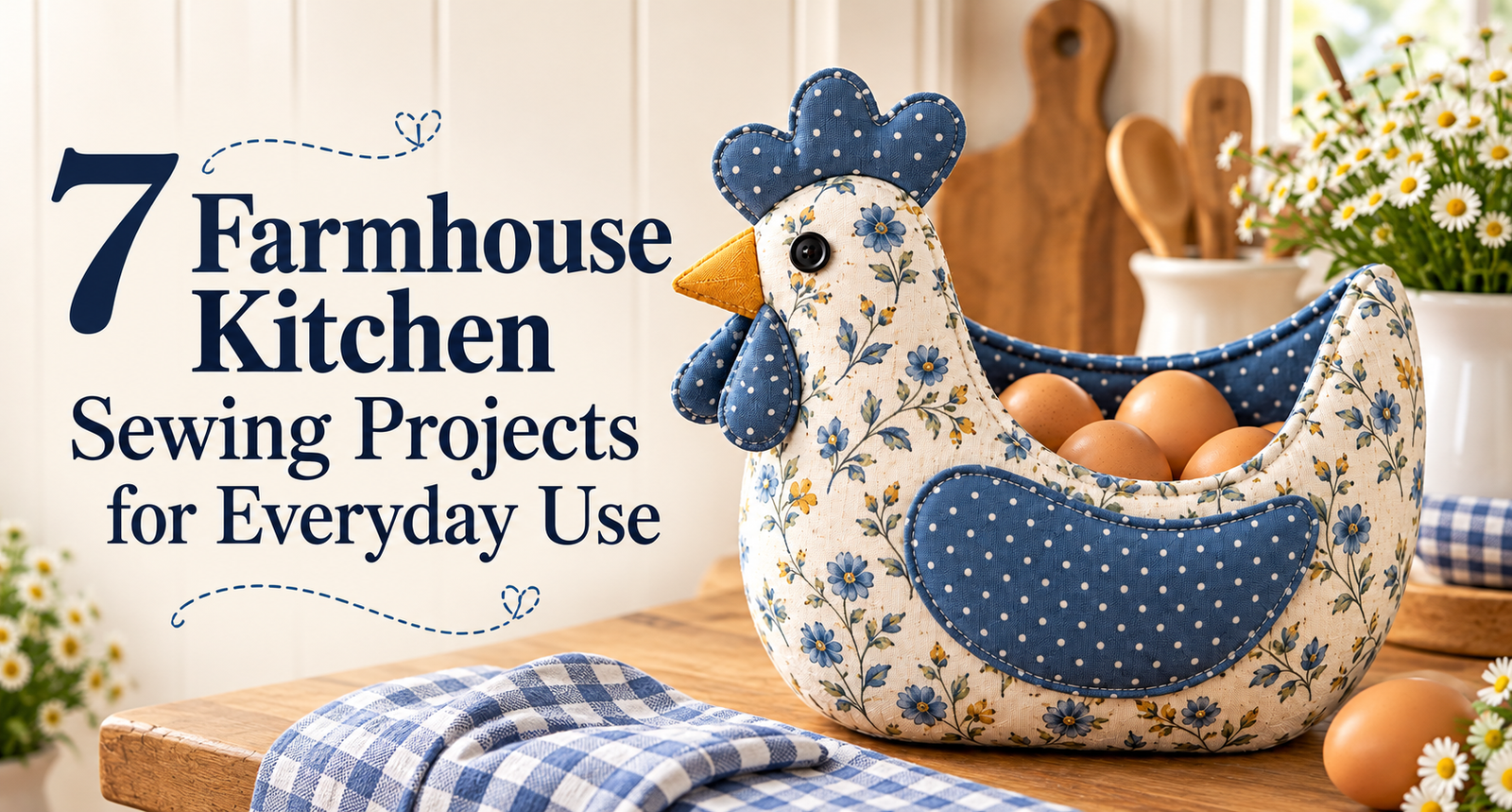
Farmhouse kitchen Sewing Projects bring practical storage, inviting textures, and handmade personality into the heart of your home. From reusable cloth napkins to a charming Chicken Egg Holder, these projects can help organize everyday essentials while complementing your kitchen decor.
The key is choosing items you will actually use. A beautiful fabric holder becomes more rewarding when it keeps coffee supplies together, dresses your breakfast table, or gives small pantry items a convenient home.
Here are seven useful sewing ideas, plus fabric tips to help you create pieces that suit your space.
1. Chicken Egg Holder for Handmade Charm and Practical Storage: Farmhouse Kitchen Sewing Projects
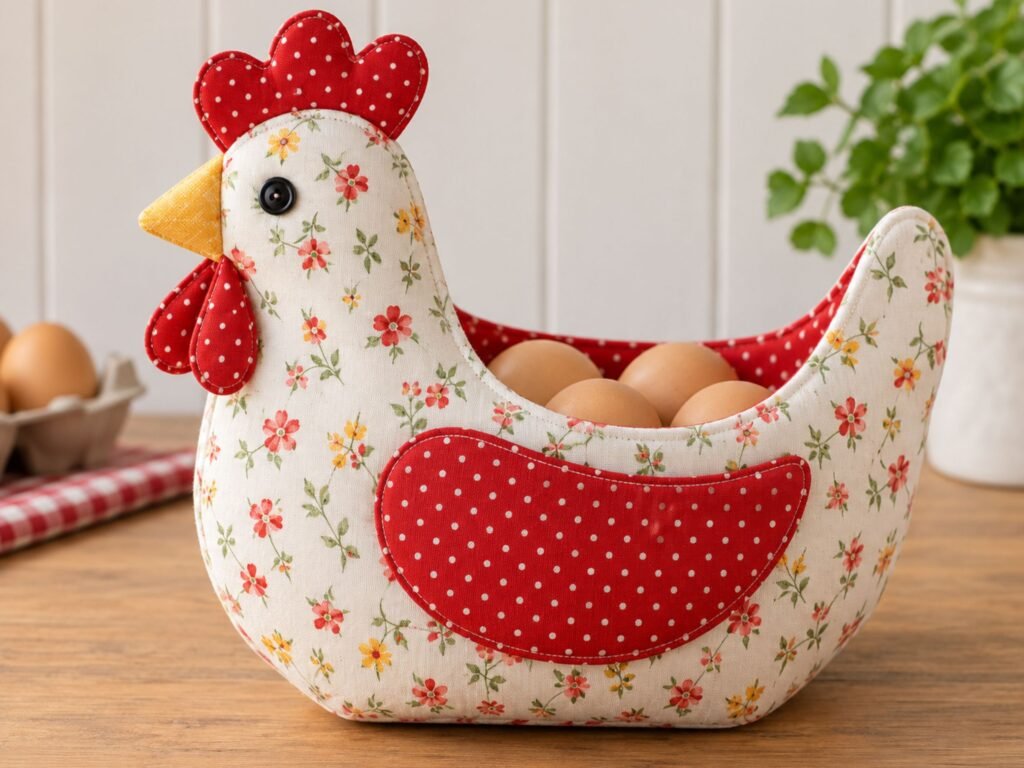
A Chicken Egg Holder combines a playful shape with a useful fabric container. While eggs are its obvious inspiration, it can also become an accessory for coffee bars, breakfast stations, and seasonal displays.
Its versatility depends on the finished dimensions and construction. Choose contents that fit comfortably without stretching or overloading the holder.
Kitchen Counter Organization: Farmhouse Kitchen Sewing Projects
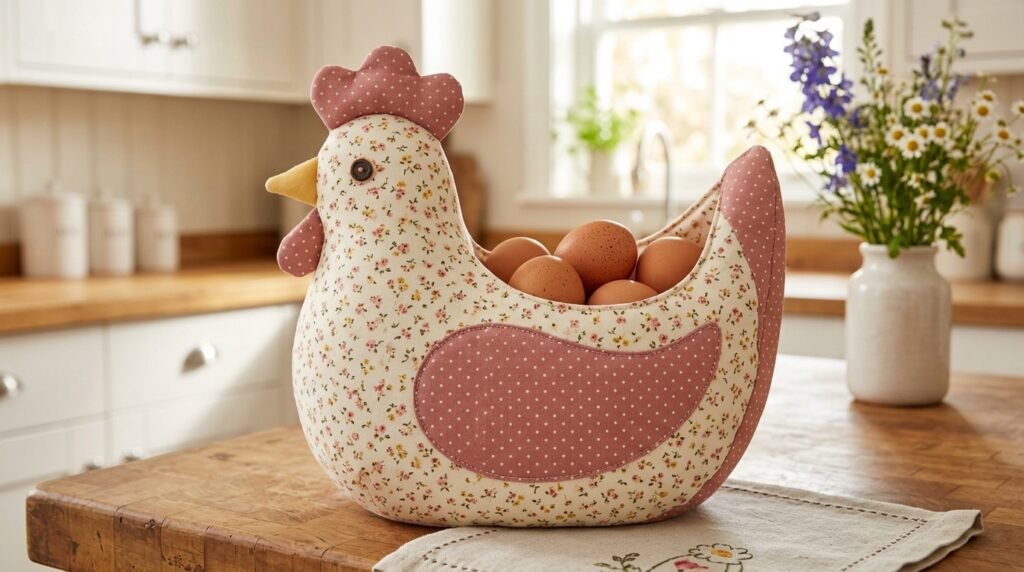
Place the holder on a counter to gather small, lightweight, packaged essentials. Wrapped snacks or tea packets can be easier to find when grouped together.
A gingham or chicken print introduces a cheerful farmhouse detail. For a more understated kitchen, choose neutral cotton canvas with a coordinating lining.
Coffee Bar Storage
Use the Chicken Egg Holder to organize sugar sachets, wrapped biscuits, or individual tea bags. Pair it with a tray and matching fabric napkins to create a coordinated coffee corner.
Keeping the contents within easy reach makes the holder useful throughout the day.
Breakfast Table Presentation
A fabric egg holder can add a welcoming detail to a breakfast spread. Coordinate it with place mats and a bread basket liner for a table that feels thoughtfully arranged.
Use it as a presentation accessory and follow the storage directions for your eggs. Fabric holders do not replace required refrigeration or other appropriate storage conditions.
Holiday Displays and Farmhouse Decorating
The chicken shape also works as a decorative feature. Display it with artificial eggs in spring or fill it with packaged treats for a seasonal table.
Changing the fabric changes the mood. Pastel floral create a softer look, while muted checks and natural canvas suit year-round farmhouse decorating.
Pantry Organization
If the finished size suits your shelf, use the holder to group small packets or wrapped items. Keep it accessible and avoid filling it so heavily that it loses its shape.
2. Bread Basket Liner for Everyday Serving
A bread basket liner adds a handmade layer to breakfast, lunch, or dinner. It can refresh an existing basket and help connect your serving accessories with the rest of the kitchen.
Choose a simple shape that fits your basket and a fabric with suitable care instructions. A removable liner is convenient when cleaning is needed.
For a coordinated set, repeat one color from your Chicken Egg Holder rather than using the same print for every item.
3. Cloth Napkins for a Coordinated Table
Cloth napkins are straightforward farmhouse kitchen sewing projects that suit everyday meals and special occasions.
Checks, stripes, and small floral work well together when they share a common color. You might combine cream-and-red gingham napkins with a neutral holder or use soft blue linens beside a floral bread basket liner.
Select fabric that feels comfortable to use and can be cleaned according to your household routine. Neatly finished hems give the napkins a polished appearance.
4. Fabric Storage Baskets for Small Kitchen Essentials
Fabric baskets can give loose kitchen items a defined place. Make a basket for folded napkins, packaged snacks, or tea supplies, choosing dimensions that suit both the contents and the available space.
Structure matters here. Follow your chosen pattern’s recommendations for interfacing, fleece, or other supporting materials.
A basket intended for lightweight packets may need a different construction from one designed to hold larger items. Avoid assuming that extra padding alone will provide enough support.
5. Quilted Place mats for Color and Texture
Quilted place mats introduce texture without requiring a large decorating change. They also offer an opportunity to combine several coordinating fabrics in one project.
Use a patterned center with a plain border, or choose a simple patchwork layout that repeats colors from your other kitchen accessories.
Follow a suitable place mat pattern for construction and care. Ordinary quilted place mats should not be treated as protective mats for hot cookware.
6. Hanging Kitchen Towels for Convenient Access
A hanging towel keeps a frequently used kitchen item close at hand. Depending on the design, a sewn tab or fabric topper can help secure it around a suitable handle.
Use a coordinating print for the topper to connect the towel with your Chicken Egg Holder or fabric baskets.
Choose a location where the towel remains clear of heat sources and does not interfere with opening drawers or appliances.
7. Kitchen Curtains for a Finished Farmhouse Look
A small kitchen curtain can carry your chosen fabric palette into another part of the room. Café curtains and simple valances are options to consider according to your window and preferred coverage.
Measure carefully before cutting and choose fabric that creates the amount of light and privacy you want.
A restrained stripe or small check can balance more decorative accessories elsewhere in the kitchen.
How to Choose Fabrics for Farmhouse Kitchen Sewing Projects
Fabric affects appearance, handling, structure, and care. Before choosing a print, consider how you intend to use the finished piece.
The Chicken Egg Holder pattern recommends quilting cotton or cotton canvas, depending on the desired structure.
Quilting Cotton for Decorative Variety
Quilting cotton provides a wide selection of prints, including floral, gingham, stripes, and chicken motifs. It is useful when you want to coordinate several kitchen accessories.
Its lighter body means the finished holder’s structure will also depend on the pattern’s supporting materials and construction.
Cotton Canvas for More Body
Cotton canvas generally offers a firmer feel than quilting cotton. It can suit a holder where you prefer more structure and a textured appearance.
Follow the pattern’s guidance when selecting canvas. Heavier fabric can add bulk at seams, particularly around small details.
Choosing Prints and Colors
A farmhouse palette can be neutral, colorful, or somewhere in between. Cream, muted red, soft blue, sage, and natural fabric tones are possible starting points.
Consider print scale as well. Small motifs often remain visible across compact pattern pieces, while large designs may be interrupted by seams.
Fusible Fleece, Structure, and Durability
Where the pattern specifies fusible fleece, use the recommended type and follow its application instructions. Fleece can add body and a softly padded finish, helping the project achieve its intended appearance.
Avoid adding extra layers without checking how they will affect construction. Too much thickness can create bulky seams or make shaping difficult.
For frequently handled kitchen accessories, focus on:
- Accurate cutting and seam allowances.
- Secure stitching at stress points.
- Neatly finished edges.
- Fabrics and supporting materials with compatible care requirements.
- Contents that suit the finished holder’s size and strength.
These choices help balance decorative appeal with practical everyday use.
Using Fabric Egg Holders Instead of Ordinary Cartons
A decorative Chicken Egg Holder offers a more personal presentation for a breakfast table or serving arrangement. Its fabric, texture, and shape can make the setting feel warmer and more coordinated.
However, presentation and storage serve different purposes. A handmade holder should not be assumed to preserve freshness, prevent breakage, or perform every function of an egg carton.
Follow the storage instructions for the eggs you buy and retain packaging information when needed. Use the fabric holder for an appropriate display or serving occasion.
Create a Matching Set You Will Actually Use
Start with one project that addresses a daily need. If your coffee supplies are scattered, begin with a holder or basket. If your table needs a refresh, sew napkins or place mats.
Then build a coordinated set gradually. A Chicken Egg Holder, bread basket liner, and cloth napkins can share a color without repeating the same fabric everywhere.
The most useful farmhouse kitchen sewing projects combine thoughtful design with familiar routines. Choose suitable materials, follow the pattern, and give each finished piece a purpose in your kitchen.
FAQs: Farmhouse Kitchen Sewing Projects
What are useful farmhouse kitchen sewing projects?
Chicken Egg Holders, bread basket liners, cloth napkins, fabric storage baskets, quilted place mats, hanging towels, and kitchen curtains are useful options. Choose according to your sewing experience and everyday needs.
Which fabric should I use for a Chicken Egg Holder?
The pattern recommends quilting cotton or cotton canvas, depending on the desired structure. Quilting cotton offers many decorative prints, while cotton canvas generally provides more body.
Can a Chicken Egg Holder be used for other items?
Depending on its size and construction, it can hold tea packets, sugar sachets, wrapped treats, or lightweight pantry essentials. It can also become part of a seasonal display.
Why is fusible fleece used in fabric holders?
When specified by the pattern, fusible fleece adds body and a padded finish. Use the recommended material and follow the manufacturer’s application instructions.
Can a fabric egg holder replace an egg carton for storage?
A fabric holder can provide decorative presentation, but it should not be assumed to offer the same storage or protection as the original carton. Follow the eggs storage directions.